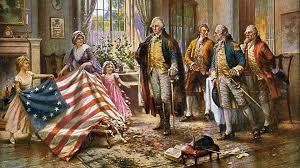
The Civilization module (CL) is a core component of the English Language and Literature curriculum, designed to introduce second-year students to the historical, political, social, and cultural development of the English-speaking world, with particular focus on Britain and/or the United States. Building on the foundations laid in the first year, this second-semester course deepens students' understanding of the key events, institutions, and movements that have shaped the target civilization(s), while reinforcing their academic language skills in English.
The course is conceived not merely as a transmission of historical facts, but as a means of developing students' critical thinking, analytical reasoning, and intercultural competence. Students are encouraged to relate historical developments to contemporary social and political realities, and to compare the target civilization with their own cultural background, thereby fostering open-mindedness and cross-cultural awareness.This module also serves as a linguistic and academic support: through exposure to historical documents, texts, and discussions, students expand their vocabulary, improve their reading comprehension of authentic materials, and practice oral and written expression on civilization-related themes.This semester focuses on "the history of the United States from independence to the 20th century" Students will study major historical periods, turning points, and figures, as well as the political, economic, and social institutions that define the civilization under study.- Dr.: Assia Boulahlib
In previous lessons, we learned that essays can serve different purposes, such as narrating experiences, describing people or places, persuading readers, or explaining information. Today, we will focus on the expository essay, one of the most common forms of academic writing. Unlike argumentative essays, which aim to convince readers of a particular viewpoint, expository essays seek to inform, explain, and clarify a topic using facts, evidence, and logical reasoning. They present information in a clear, objective, and organized manner without relying on personal opinions or emotional appeals. Throughout this lesson, we will explore the characteristics and types of expository essays, with special attention to the structure and organization of the definition essay.
Prerequisites for the lecture
Before beginning this course, students should be able to:
1- Recognize 3 types of essays
2- Understand the structure and components of a 5-paragraph essay
3. Write a 5-paragraph essay
Learning objectives:
By the end of this course, students will be able to:1- Recall/know the main 4 types of essays
2- Identify/explain the characteristics of an expository essay
3- Distinguish between different types of expository essays
4- Understand/analyze the structure of an expository definition essay
5- Write a 5-paragraph expository definition essay
- Dr.: alaeddine boutamine

This course offers an in-depth exploration of English sentence and clause structure, enabling students to understand how meaning is constructed through grammar. It introduces learners to the fundamental difference between sentences and clauses, gradually guiding them toward more advanced structures such as compound and complex sentences.
The course begins by laying the groundwork with clear distinctions between clauses and sentences, addressing their structural components and communicative functions. Students then explore how sentences differ in function (declarative, interrogative, imperative, exclamatory) and in form (simple, compound, complex, and compound-complex).
A significant portion of the course is devoted to the different types of clauses—independent and dependent—as well as their subcategories, including noun, adjective (relative), and adverbial clauses. Learners will examine these both in isolation and in context, with attention to how clauses contribute to sentence clarity and cohesion.
The final part of the course provides a focused study of the compound sentence. Students will learn how coordination, juxtaposition, and insertion create relationships between ideas, improve cohesion, and add stylistic variety. Attention is also given to punctuation, connectors, and patterns of linkage.
Throughout the course, learners will engage in analysis, transformation, and production exercises to reinforce their understanding. They will read examples, combine sentences, deconstruct structures, and apply theoretical knowledge in writing and speaking tasks. By the end of the course, students will have a strong command of sentence construction and clause usage, enabling them to produce accurate and sophisticated English in academic and professional contexts.
- Teacher: Soror Oumeddour

DL course introduces students to the foundations of literacy and digital literacy in academic and real-world contexts. It explores how digital tools, media platforms, and online environments shape the way individuals read, write, communicate, and access information. Through theoretical input and hands-on activities, students will develop the skills necessary to navigate digital spaces critically, ethically, and effectively for academic, professional, and scientific purposes.
- Teacher: Soror Oumeddour

Ce cours apprend aux étudiants plus d'aspects de français parlé contemporain à travers des phrases et expressions de la vie quotidienne, expliqués par des natifs français. Des discussions autour de vidéos YouTube permettent une immersion plus approfondie dans la langue parlée actuelle. Plus avancé, l'objectif principal de cette année est de ramener les apprenants de comprendre et pratiquer le français tel qu'utilisé dans les conversations de tous les jours, pour une meilleure compréhension et une communication plus aisée.


An important part of successful language teaching is understanding the principles of linguistics and how they relate to the production and comprehension of language. Introduction to Linguistics is a basic course laying the foundation of linguist' professional expertise. The discipline aims to raise students' awareness of what linguistics is, what and how it studies. It prepares students for further in-depth study of other related subjects. The discipline gives the basic knowledge of such issues as the origin of language, its structure, functioning in the society, correlation of lingual and mental processes, interdependence of language and culture, etc. The discipline familiarizes students with universal properties of human language and linguistic diversity.
- Teacher: Nour Ouchene

Avoir une connaissance des différents types de textes
- Teacher: Rachida Chichoune

les textes peuvent se distinguer selon différents types. l'objectif est de savoir à quel genre de texte nous-avons à faire.
- Teacher: Rachida Chichoune